Purchases made through links on Bore & Bed may earn us an affiliate commission at zero additional cost to you. How our referral links and affiliate partnerships work
An espresso puck screen sits on top of the tamped coffee bed, between the grounds and the group head. It can help keep the shower screen cleaner and provides a more structured interface for brew water—but it also takes up basket capacity. The best choice depends less on marketing claims than on three practical details: basket diameter, screen thickness, and available headroom.
What an espresso puck screen does
After tamping, place the screen flat on the coffee puck before locking in the portafilter. It forms a thin protective layer between the puck and shower screen and may reduce loose coffee contacting the brew head. It is not a replacement for a properly sized basket, even distribution, or an appropriate dose.
Controlled comparative brewing results were not provided in the manufacturer documentation reviewed, so a puck screen should be treated primarily as a cleanliness, workflow, and headroom accessory—not a guaranteed way to improve extraction.
0.2 mm versus 0.8 mm: the meaningful difference
0.2 mm: maximum headroom
Published specifications for 0.2 mm screens include stainless-steel construction and approximately 200 μm filtration. Their thin profile leaves more room for coffee in the basket; Normcore estimates that a screen may reduce practical dose capacity by roughly 1 g, depending on the screen and basket. See the Normcore specification and MHW-3BOMBER’s 0.2 mm documentation.
The trade-off is a less substantial, more delicate-feeling screen. It is a sensible starting point for shallow baskets, high doses, or machines where a thicker screen risks contact with the shower hardware.
0.8 mm: sturdier everyday choice
Documented 0.8 mm designs include both single-layer and double-layer stainless-steel constructions. MHW-3BOMBER specifies a double-layer 304 stainless-steel version, while SiF lists single-layer 0.8 mm models. Their specifications are available from MHW-3BOMBER and SiF Coffee.
A thicker screen is generally easier to handle and less prone to bending than an ultra-thin one, but it consumes more basket volume. Check clearance carefully if your group head has a protruding screw or other internal hardware; MHW-3BOMBER specifically warns against use where such contact can occur.
Fit matters more than the portafilter label
Do not choose solely by calling your machine “51 mm,” “54 mm,” or “58 mm.” The relevant measurement is the usable internal diameter of the basket. Published puck-screen sizes include 51 mm, 53/53.3/53.5 mm, 58 mm, and 58.5 mm. A screen that is too small may leave an exposed edge of the puck; one that is too large may catch on the basket wall or fail to sit flat.
- Identify the exact basket, including whether it is an aftermarket precision basket.
- Check the manufacturer’s intended screen diameter rather than assuming the machine’s nominal group size.
- Measure or verify the basket’s internal diameter if the listing offers several close sizes.
- Confirm that the screen does not foul the basket rim, group gasket, or shower-screen screw.
After fitting the screen, lock in the portafilter without force. If resistance is noticeably greater than usual, reduce the dose or use a thinner screen; do not treat excessive resistance as normal compression.
Magnetic screens: convenient, but not automatically better
Magnetic designs can make a thin screen easier to pick up and remove. However, “magnetic puck screen” can describe different products and mounting arrangements. Artisan Grind’s documentation describes a 0.2 mm, 304 stainless-steel magnetic product, but also calls it a shower screen and describes mounting it to the group head. That means it should not automatically be treated as equivalent to a screen placed directly on top of the tamped puck. Review the machine interface and the maker’s installation instructions before buying; see the Artisan Grind documentation.
For a conventional puck-top accessory, the magnet is mainly a handling feature. It does not by itself establish better distribution or extraction.
Options in this guide
The listings below cover the common sizes and constructions, but several seller pages were unavailable for detailed verification. Treat the dimensions and thicknesses shown in each product title as listing information, and confirm the exact variant before ordering.
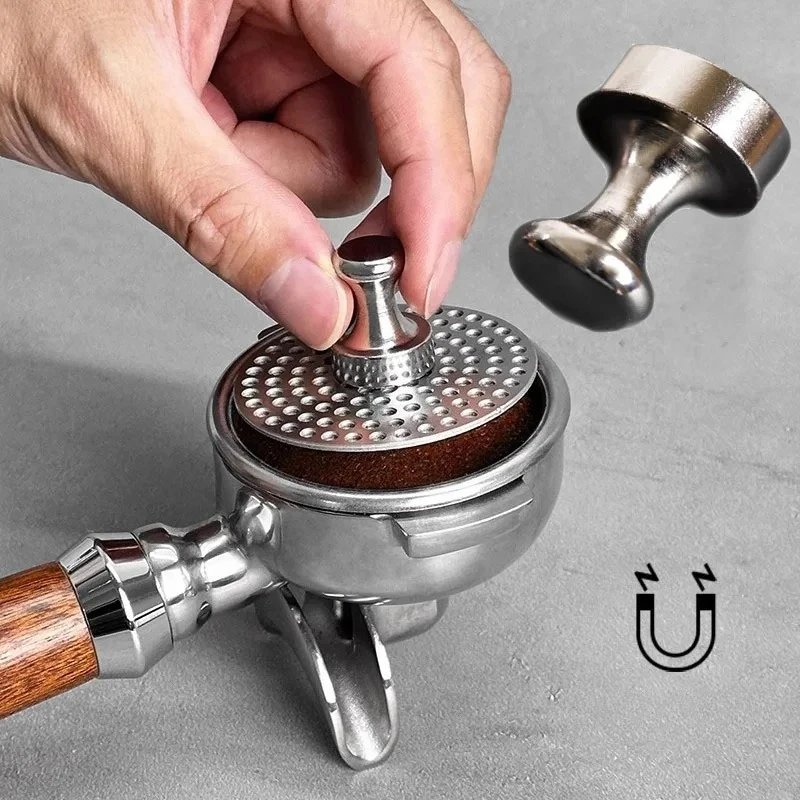
Magnet-handle option: This listing is aimed at buyers who want a reusable screen with a magnetic handle, with 51, 53, and 58 mm variants shown in the title. Verify whether the handle is intended to remain attached during brewing or only to assist removal.
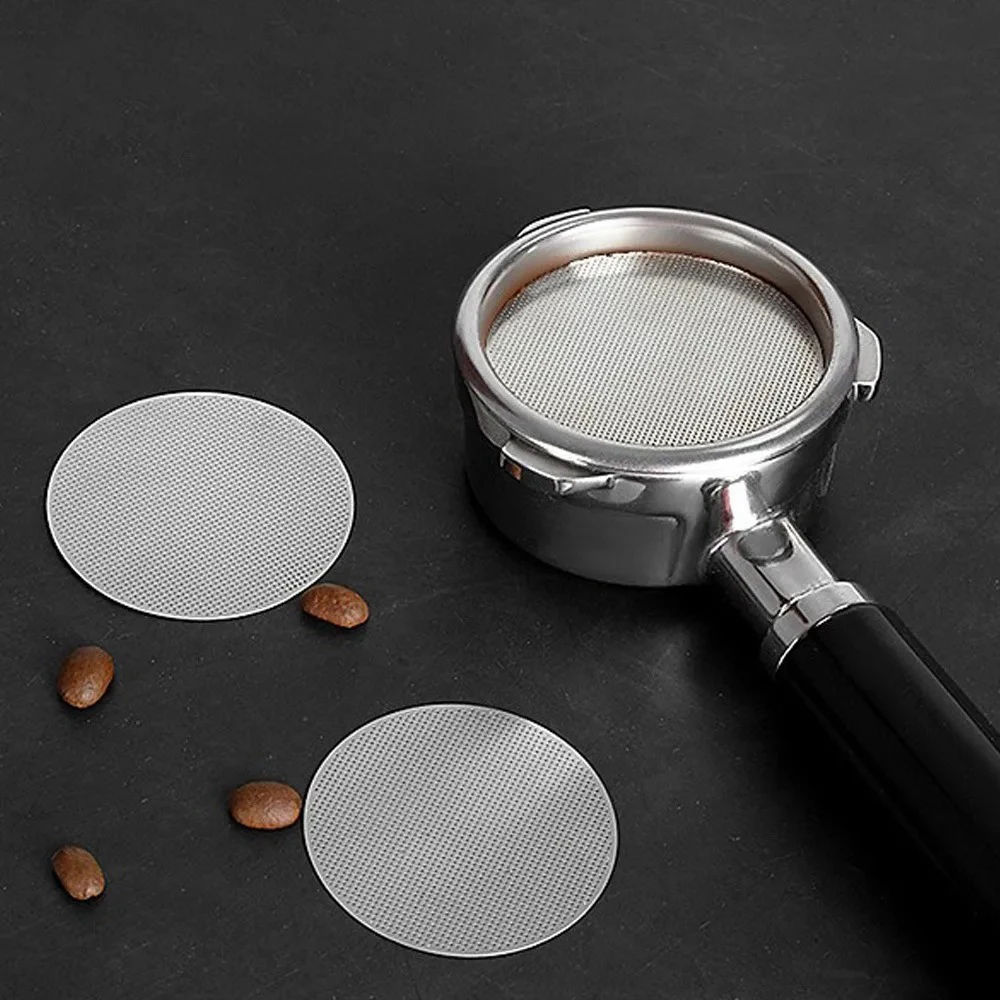
Budget 0.2 mm option: The listing identifies a 0.2 mm stainless-steel mesh in 51, 53, and 58.5 mm sizes. It may suit buyers prioritizing minimal basket-volume loss, but construction details beyond the listing title are unavailable.
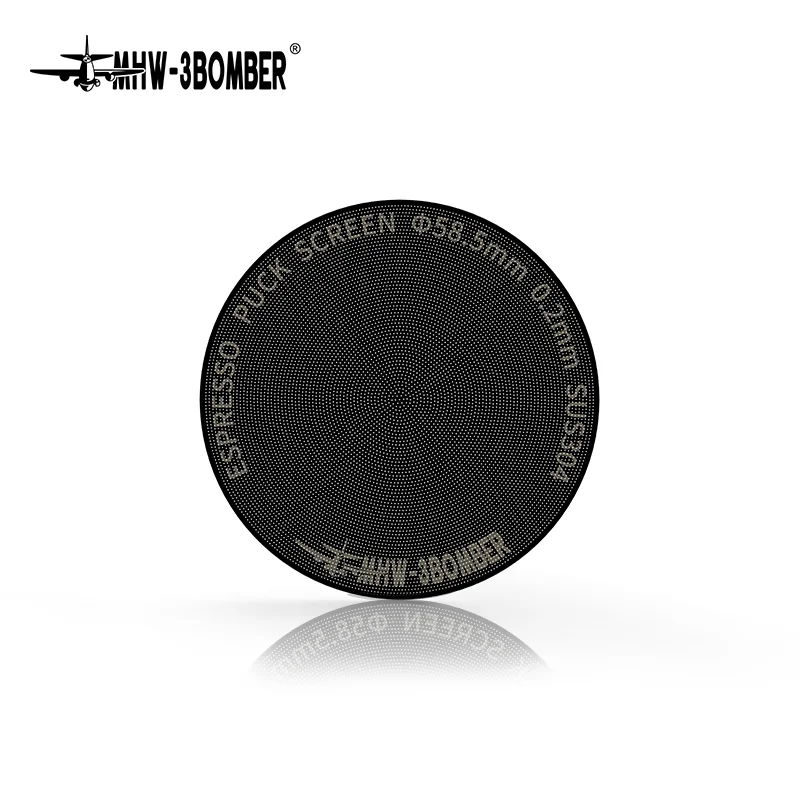
Choice of thickness: This MHW-3BOMBER listing identifies 51, 53, and 58.5 mm options and both 0.2 mm and 0.8 mm versions. Select by basket fit first, then choose the thickness that matches your available headroom.
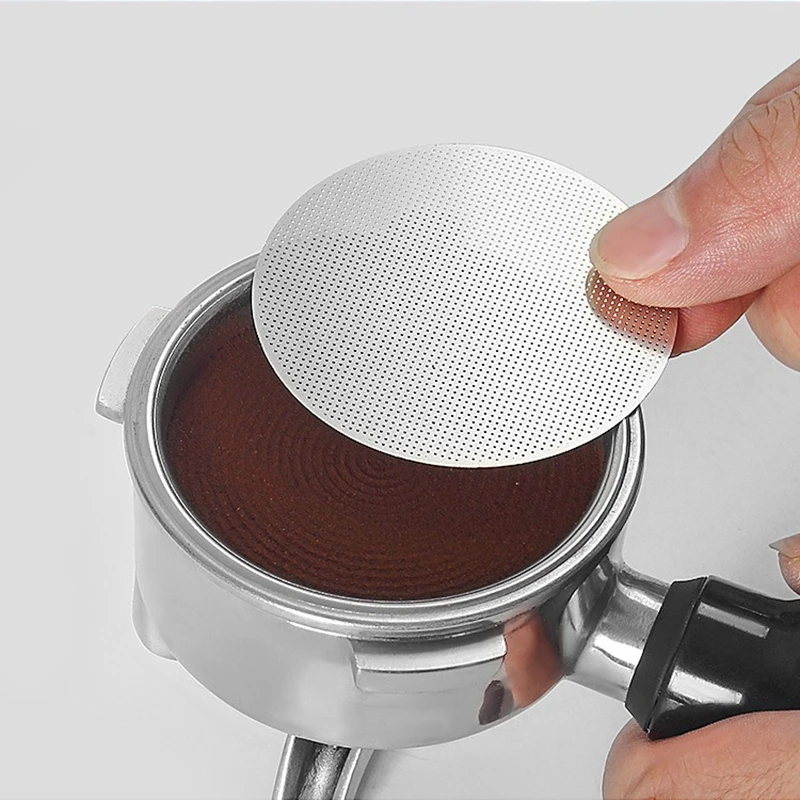
Simple stainless-steel alternative: This listing identifies a reusable 304 stainless-steel screen in 51, 54, and 58 mm sizes. The product page details were unavailable, so confirm the exact mesh and thickness before purchase.
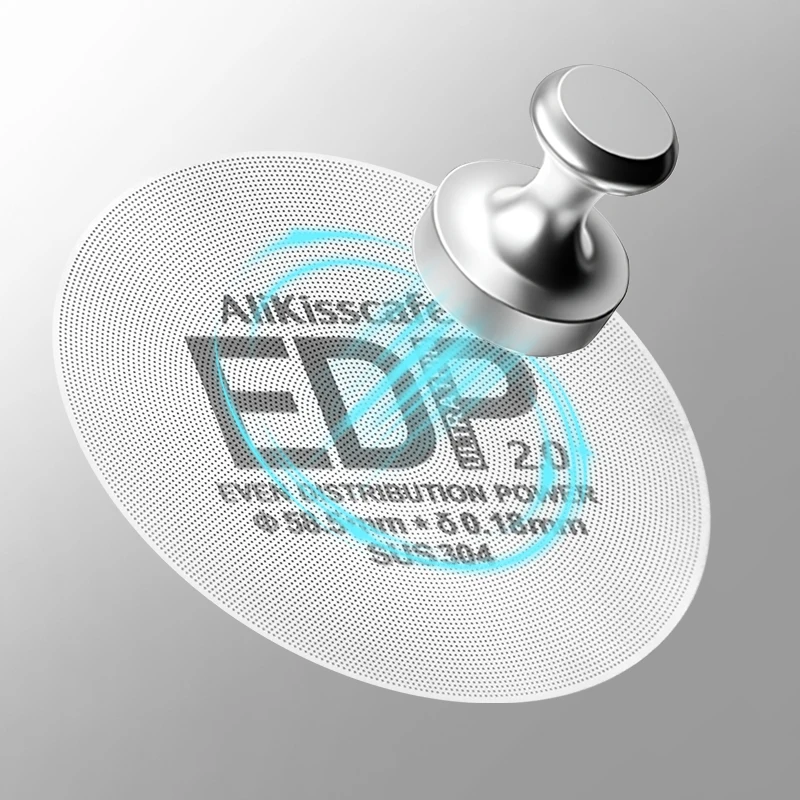
Magnetic multi-size option: The listing shows magnetic screens in several sizes, including 49.5, 51, 53.5, 57.3, and 58.5 mm. That range is useful for less common baskets, but close sizes are not interchangeable—match the screen to the basket’s internal fit.
How to use and clean a puck screen
- Prepare and tamp the coffee as usual.
- Place the screen level on top of the puck, with no coffee grounds trapped around the basket rim.
- Lock in the portafilter gently and brew.
- Remove the screen after brewing and rinse away coffee oils and particles.
- Periodically soak it according to the screen maker’s cleaning guidance, then rinse thoroughly and dry completely.
Inspect the screen for warping, blocked holes, sharp edges, or a loose coating. A bent screen may sit unevenly and a clogged screen can become harder to clean. Avoid abrasive cleaning that could damage a coating, and do not leave a wet stainless-steel accessory stored in the basket.
Which one should you buy?
- Choose 0.2 mm if your dose already fills the basket, you have limited headroom, or you want the thinnest possible accessory.
- Choose 0.8 mm if you value rigidity and straightforward handling and have confirmed adequate clearance.
- Choose magnetic if removal is awkward and the product’s magnetic interface is explicitly compatible with your machine.
- Choose by exact diameter before comparing mesh, coatings, or price.
A puck screen is a small workflow upgrade, not a substitute for correct dosing and basket fit. If the screen makes the portafilter difficult to lock in, causes visible contact, or forces you to overfill the basket, it is the wrong thickness or size for that setup.